


In Design-Build, the Estimator Needs to Be in the Room Early
By NorthStar EstimatingJune 29, 2026
In a traditional hard-bid world, an estimator is often a historian; reporting on what has already been drawn.
But in the design-build world, the estimator has a different role.
We have to be architects of the budget, strategic partners to the design team, and sometimes the people who remind the room that gravity is not an opinion, it is a law.
That may sound simple, but it is an important distinction.
Design-build works best when cost, constructability, schedule, and design intent are discussed together while the project is still being shaped. The estimator cannot wait until the end of the process to price a complete set of drawings. By then, many of the most important decisions may already be locked in.
The owner, design-builder, architect, engineers, trade partners, superintendent, project manager, and estimator all have a role to play. Each discipline brings a different perspective. Each decision affects the next. And when the project budget is fixed or highly sensitive, the timing of cost input matters.
From the estimating side, one of the biggest mistakes a design-build team can make is treating the estimator as someone who simply prices the drawings after decisions have already been made.
That may work in a traditional hard-bid environment, where the estimator is pricing a completed set of documents. But design-build is different.
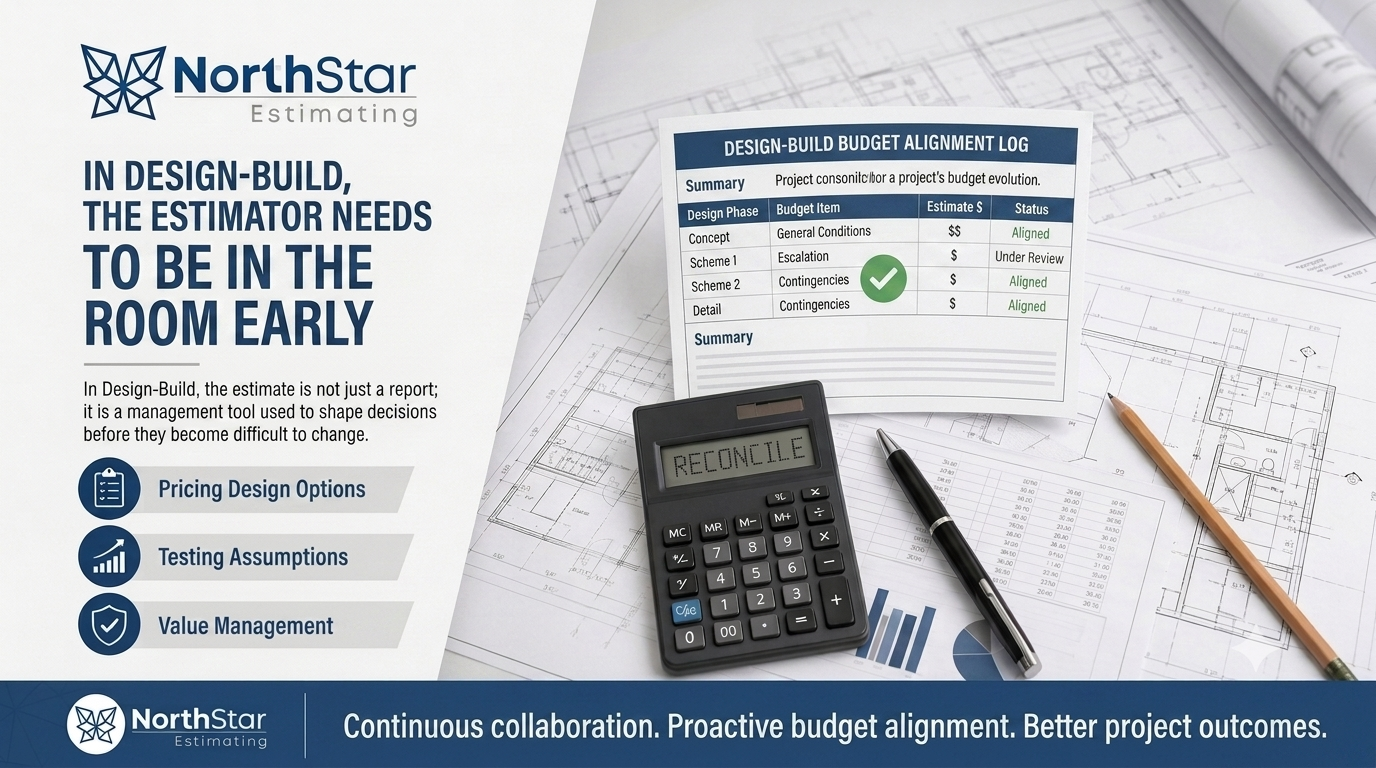
In design-build, the estimate is not just a report. It is a management tool.
Design-Build Requires a Different Estimating Mindset
A hard-bid estimate is typically based on the documents provided. The estimator measures what is shown, prices the scope, qualifies assumptions, and identifies gaps or risks.
Design-build requires a broader role.
The documents may be incomplete. The design may still be evolving. Scope may be defined by narrative, performance criteria, bridging documents, owner standards, or basis-of-design information. The team may be making decisions long before all details are drawn.
That means the estimator has to price what is shown, but also understand what is likely required to make the project complete.
The role shifts from simply answering, "What does this set cost?" to helping the team understand, "Where is this design going, what will it take to build it, and are we staying aligned with the budget?"
The Estimator as Budget Gatekeeper
In design-build, the estimator becomes one of the budget gatekeepers.
That does not mean the estimator controls the design. It means the estimator helps the team understand the cost impact of design decisions before those decisions become difficult to change.
When cost input happens too late, the team may unknowingly present an option to the owner that is attractive, memorable, and expensive. Once the owner has seen it and likes it, removing it later can feel like a loss.
Early estimating input helps avoid that situation.
If a feature, system, finish, or detail is creating significant cost or schedule pressure, the team can evaluate alternatives before expectations are set. Sometimes the design intent can be preserved with a more efficient material, assembly, system, or approach. But that opportunity is strongest before the design is fully committed.
Value Management Is Not Just Cost Cutting
Value management is often misunderstood.
Too often, it is treated as a late-stage cost reduction exercise. The estimate comes in over budget, and the team starts looking for items to delete, downgrade, or defer.
That is not the best use of value management.
In a strong design-build process, value management starts earlier and asks better questions:
- Can we achieve the same design intent more efficiently?
- Is there a system with a better lifecycle value?
- Can logistics or sequencing reduce cost or schedule duration?
- Are there details that are labor-intensive without adding meaningful value?
- Are we investing the budget in the areas that matter most to the owner?
- Are there enhancements that could improve the project while staying within budget?
Sometimes value management reduces cost. Sometimes it reallocates cost. Sometimes it may even increase first cost if the long-term operational benefit is strong enough.
The point is not simply to spend less. The point is to spend intentionally.
Cost Input Should Continue as the Design Develops
Design-build pricing is not a one-time event.
The estimate should evolve as the design evolves. At each stage, the team should understand what changed, why it changed, and how those changes affect the budget.
A simple cost trend log can be one of the most useful tools in this process. It helps the team track movement from one design milestone to the next and identify which decisions are driving cost changes.
This is especially important when the project is awarded before the documents are fully complete. The team may have a contract value, but design decisions are still being made. If cost tracking stops too early, budget risk can build quietly in the background.
The Estimator Helps the Team Make Better Decisions
The estimator does not replace the architect, engineer, trade partner, or builder. But the estimator helps connect their decisions to the budget.
That role includes:
- Pricing design options
- Identifying major cost drivers
- Testing assumptions
- Flagging scope gaps
- Supporting value management
- Tracking budget movement
- Helping compare materials, systems, and approaches
- Understanding where incomplete design may create future cost risk
The best design-build estimators are not just good with quantities. They understand constructability, sequencing, market conditions, trade behavior, and how incomplete information becomes real cost.
They also know how to communicate cost without stopping the design process. The goal is not to say "no" to ideas. The goal is to help the team understand what those ideas mean.
Final Thought
A good design-build team keeps cost in the conversation from the beginning.
Not as a constraint that limits creativity, but as a guide that helps the team make better, more informed decisions.
When the estimator is involved early, the team has a better chance of protecting the design intent, managing budget risk, and delivering a project that aligns with the owner's goals.
In design-build, the estimator should not be waiting at the end of the process with a spreadsheet.
The estimator should be in the room while the project is being shaped.
NorthStar Estimating, Inc. provides independent cost estimating and cost management services for public-sector, institutional, and complex building projects. We help design teams understand cost drivers early, protect design intent, and make confident budget decisions from concept through construction.